The Bull & Beggar
The Bull and Beggar Hides French Alpine Cuisine Down a Dead-End Street in Asheville
Asheville's River Arts District isn't the most walkable stretch of the city. Despite the graffiti murals lining the buildings and the row of breweries down the street, it can feel a little run down, and it's easy to lose your bearings. But you can't judge a book by its cover. Halfway down a dead-end street, next to a bridge and across from the train tracks, sits a brick building with a rusty metal patio and gravel parking. You'd probably only stumble onto it if you were headed to Wedge Brewing next door. Otherwise, there'd be little reason to know it's here at all. Inside is a cozy, distinctly European restaurant called The Bull and Beggar, serving French Alpine cuisine beneath a circular iron chandelier that could have hung in a medieval hall. Wood accents soften the room, but the industrial bones keep it feeling unmistakably like Asheville.
Concrete floors and raw brick walls meet exposed ductwork and metal beams, with wooden tables and chairs breaking up all that iron and stone. The chandelier hangs low and glowing at the center of the room, and a towering black mirror commands the back wall, pushing the space upscale without tipping into pretension: it's a space built for jeans and a sharp button-down. The restaurant spreads out over a lofted second floor open to the dining room below and main bar counter, which is stacked with cookbooks. Grab a seat and flip through a couple, or cozy up with a book while you eat; the bar is the best seat in the house.
Proof Before the Plate
The cocktail program runs tight with just eight signature drinks, some straightforward, others creative riffs on the classics. An old fashioned and an espresso martini anchor one end; on the other, the Dandelion Gimlet takes the stage. It's built on gin, Suze, and lime, beautifully structured with a short, sharp punch of citrus up front, a long, earthy vegetal mid-palate, and a pleasingly tart, clean bitterness on the finish. If you have a favorite that's not on the menu, like a Last Word, just ask. Most cocktails run about $15, with the barrel-aged Misfit Manhattan capping the list at $18. That's assuming the standard spec, though: swap your old fashioned's whiskey and the price follows the bottle, from everyday pours like Maker's Mark, Woodford Reserve, and Four Roses to harder-to-find ones like Weller, Russell's Reserve, Eagle Rare, Blanton's, and E.H. Taylor Barrel Strength. It's a strong program built to hold its own, but its just the opening act for what the kitchen sends out next.
Classical French, Cooked Like Country Food
The kitchen speaks classical French, though never in quite the same accent twice. The menu is seasonal, so even a dish that sticks around, like the duck, comes back changed each time the season turns: one visit it might be a salted duck leg with rutabaga-apple mash, braised red cabbage, and a cider-truffle gastrique, replaced the next by a pan-roasted duck breast with beetroot, morello cherries, and duck liver toast. A handful of exceptions are permanent fixtures though — chief among them the oysters and escargot.
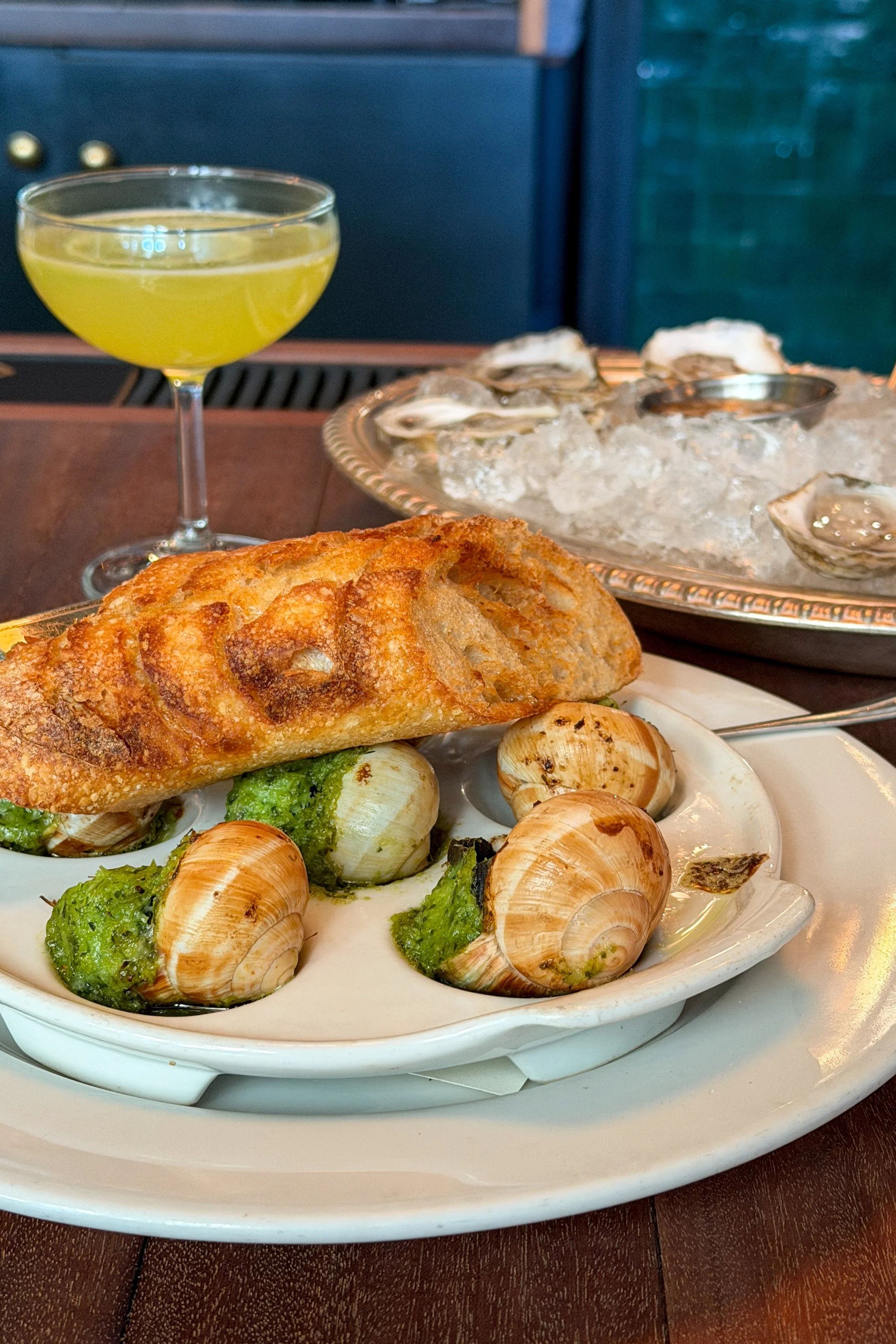
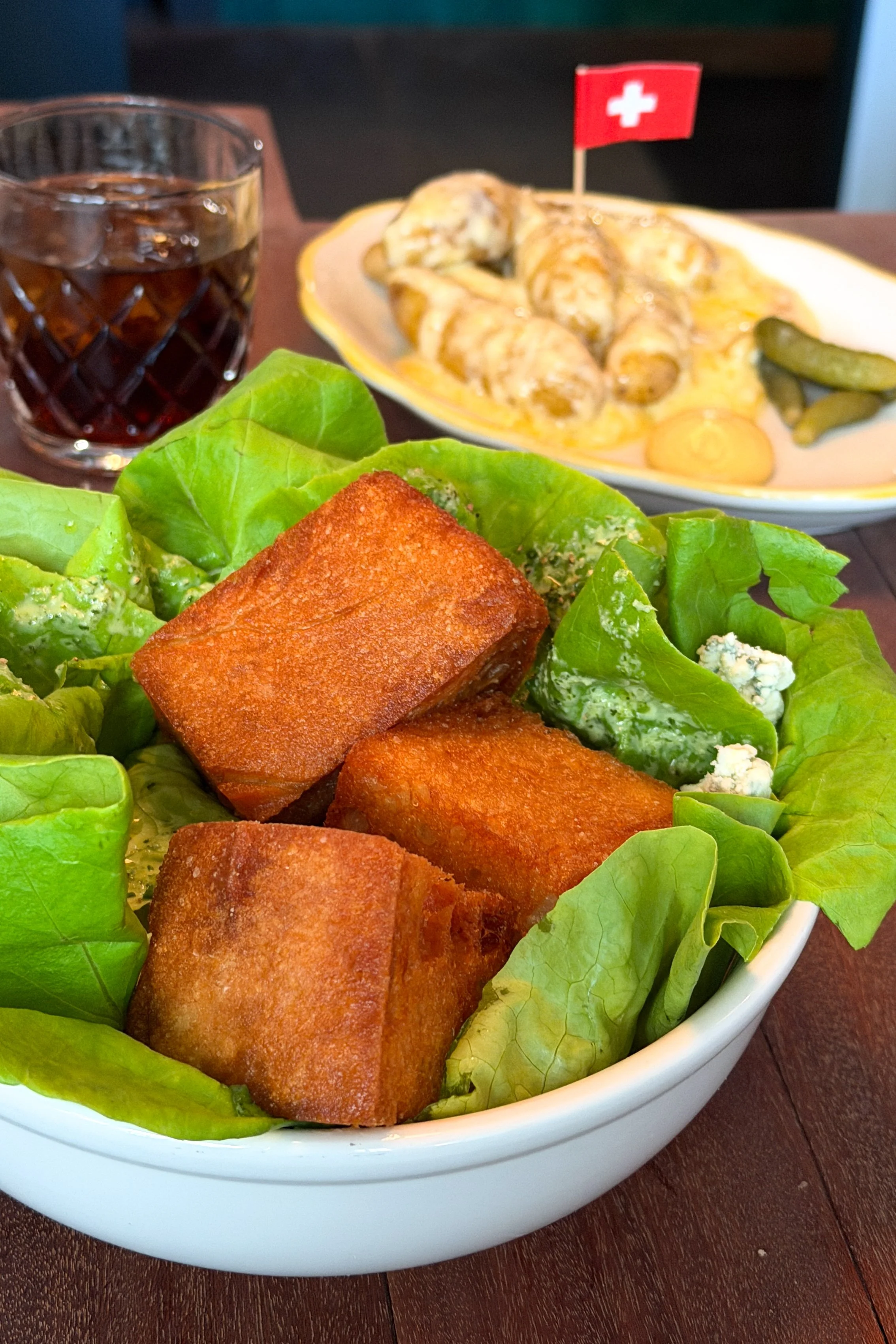
Set the tone for your night and start with small plates, which run $12 to $24. You can never go wrong with the oysters. They're usually a small to medium coldwater variety, like Beausoleil, served with a sharp pink peppercorn mignonette, arriving expertly cleaned and shucked as your first light bite. If you'd rather have something hot, try their mollusk cousin: the escargot, classically prepared, plump and perfectly tender, drowning in a puddle of butter, garlic, and fresh herbs, with hot, crisp bread to soak it all up. Every meal needs a green vegetable, so a salad has to make it to the table. The B&B Salad barely qualifies: crisp bibb lettuce buried under a blue cheese dressing so creamy it borders on decadent, crowned with croutons big enough to count as a course of their own. They're crisp on the outside but surprisingly soft and pillowy inside, unlike a standard crouton, and genuinely delicious for it, though a smaller cut would serve the dish better.
The raclette is a curious one: a classic Alpine dish that works as either a small plate or something to eat alongside your main, though it's rich and filling enough to be shared across the table. It arrives hot and bubbling, melted cheese scraped over potatoes, cut by a sharp, grainy mustard. It's an undeniably delicious, savory bomb, but it's also the one dish that missed the mark. The cheese is finicky to cook: get the temperature too high and it splits instead of staying velvety and creamy, instead turning greasy, which is what happened here. The potatoes, in contrast, ran a touch undercooked, offering more of a snap than starchy pillow. With a few adjustments though, it could be quite a lovely bite.
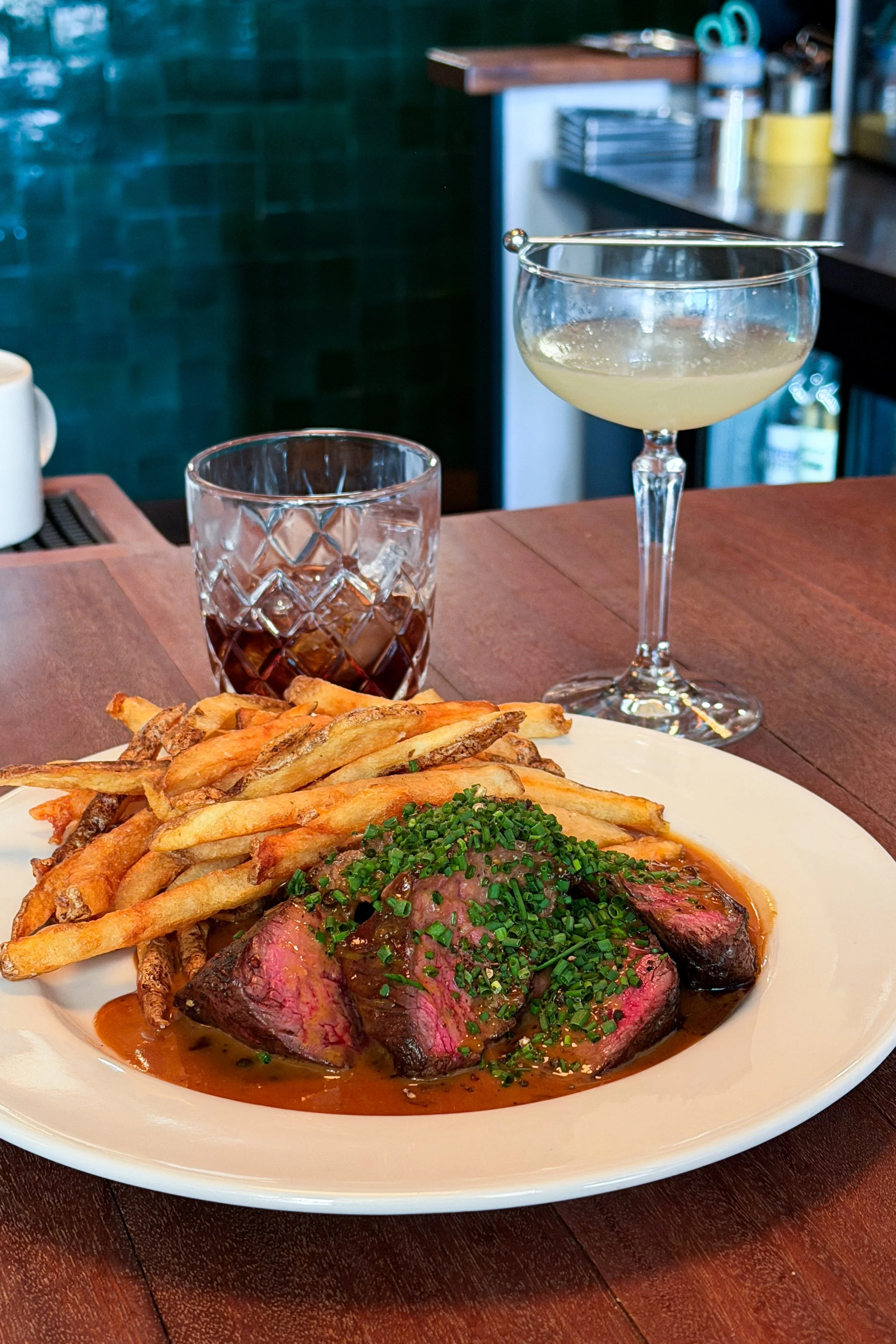
Dinner got things back on track, though. Seven entrees make up the mains: duck, a vegetarian option, seafood, pork, lamb, and steaks, averaging $45 apiece. The hangar steak, listed on the menu as the steak onglet, is served as the classic French bistro staple: steak frites. Cooked to a textbook medium-rare, the fat edges beautifully caramelized, all of it draped in a rich, velvety au poivre gravy with real depth. That said, the kitchen can be a bit heavy-handed on the salt, worth knowing if you're sensitive to sodium. It works well on the fries, but can run heavy on the meat, so keep that in mind when you order. And for tables looking to share an entree, rather than ordering separately, the steaks and chops climb as high as the 30-ounce bone-in ribeye ($160), dry-aged for 30 days and served with café de Paris butter, duck-fat pommes sauté, and a bright rocket salad.
Final Verdict
The Bull and Beggar is considered one of the best restaurants in Asheville, and it's not hard to understand why. It isn't a perfect restaurant, but the atmosphere is formal enough without turning alienating, equally at home with a group as it is with a solo diner. The food is largely well executed, and the beverage program holds its own, moving comfortably between classics and creative cocktails. It has a real sense of place, and it delivers exactly what Asheville needs.